
Bali Cooking Classes
Complete Bali Cooking Classes Information Guide
Bali cooking classes range from village and family-home kitchens to polished restaurant and hotel sessions, with many combining hands-on Balinese cooking, a shared meal and an optional market visit. Locations also change the experience: Ubud offers the widest choice, South Bali is convenient for beach-area stays, while Jatiluwih adds a rural rice-terrace setting. The main decision is not simply which class is cheapest, but which location, class format, menu, dietary support and transport arrangement best fit your day.
BALI COOKING CLASSES
Explore This Guide
Choose a topic to jump to the information you need.
BALI COOKING CLASSES
Booking Options
Start with personal local help, or compare verified online platforms.
Online bookings are handled by the selected platform. Personal assistance is provided separately by Best Bali Adventures.
What to Know Before Booking a Bali Cooking Class
Choose the class around location and format first, then compare price. A five-hour Ubud class with a morning market visit is a different experience from a rural cooking class among the Jatiluwih rice terraces, a three-hour restaurant class in South Bali or a private lesson at your villa.
Before booking, confirm the exact start time, whether the market visit is included, how hands-on the class really is, what dishes you will prepare, whether you eat the finished meal, how dietary requirements are handled and whether transport is included from your accommodation.
Bali Cooking Classes Quick Facts
| Question | Practical answer |
|---|---|
| Typical duration | Many shared classes take around 3–5 hours. Longer sessions may add a market, farm or rice-field visit. |
| Popular areas | Ubud has the largest concentration of options. Jatiluwih is a distinctive rural choice for visitors who want the rice-terrace landscape to be part of the experience, while Seminyak, Canggu, Sanur and Kuta are more convenient for many South Bali stays. |
| Typical current shared price | Many current online group listings sit roughly around IDR 300,000–600,000 per person. Private, premium hotel or transfer-heavy classes can cost more. |
| Market visit | Common with morning classes, but not universal. Afternoon and evening classes may skip the market. |
| Experience level | Most tourist-oriented classes are suitable for beginners and provide step-by-step instruction. |
| Dietary options | Vegetarian and vegan versions are widely available, but allergies and other restrictions must be confirmed with the specific class. |
| What is usually included | Instruction, ingredients, cooking equipment and the meal you prepare are common inclusions; transport and market visits vary. |
| Main planning mistake | Booking by price alone without checking location, pickup zone, market visit, menu or dietary suitability. |
Is a Bali Cooking Class Worth It?
It is a strong choice if you want a hands-on cultural activity with a meal at the end rather than another sightseeing stop. A good class explains ingredients, spice pastes and cooking methods while giving you enough practical involvement to recreate at least some of the dishes later.
| Good choice when… | Consider another activity when… |
|---|---|
| You enjoy food and want to understand how Balinese flavours are built. | You mainly want to eat rather than spend several hours preparing food. |
| You prefer an interactive activity where couples, families or groups can work together. | You dislike kitchen heat, standing for long periods or working with knives and hot equipment. |
| You want a cultural activity that still works in mixed weather. | Your schedule is so tight that a fixed three-to-five-hour session would create stress. |
| You value learning something you can repeat at home. | Your dietary or accessibility needs cannot be clearly confirmed by the selected class. |
Where to Take a Cooking Class in Bali
Choose a class near where you are staying unless a particular kitchen or market experience is important enough to justify the drive. Bali traffic can turn a half-day class into a much longer outing when the venue is far from your hotel.
| Area / format | What it commonly suits |
|---|---|
| Ubud & central Bali | The widest choice of village, home-kitchen, farm-style and market-linked experiences. Good when the food and cultural context are the main reason for booking. |
| Jatiluwih & rice-terrace area | Best when you want the landscape and rural setting to be part of the experience. The longer transfer makes Jatiluwih less convenient for a simple half-day class, but more distinctive when combined with rice-terrace walking or a wider central-Bali day. |
| Seminyak / Kuta / south coast | Convenient for beach-area stays and often easier to fit into a holiday without a long transfer. Formats range from restaurant kitchens to dedicated schools. |
| Canggu area | Useful for travellers based on the west coast who want a cooking experience without crossing to Ubud. Check whether the class is Balinese-focused or broader Indonesian cooking. |
| Sanur & southeast Bali | Practical for Sanur-based visitors and families who want to avoid a long inland transfer. Availability is smaller than in Ubud, so compare exact menus and times. |
| Private / villa class | Best when privacy, young children, a group event or reduced travel matters more than a market visit or traditional cooking-school setting. |
Cooking Classes in the Jatiluwih Rice Terraces
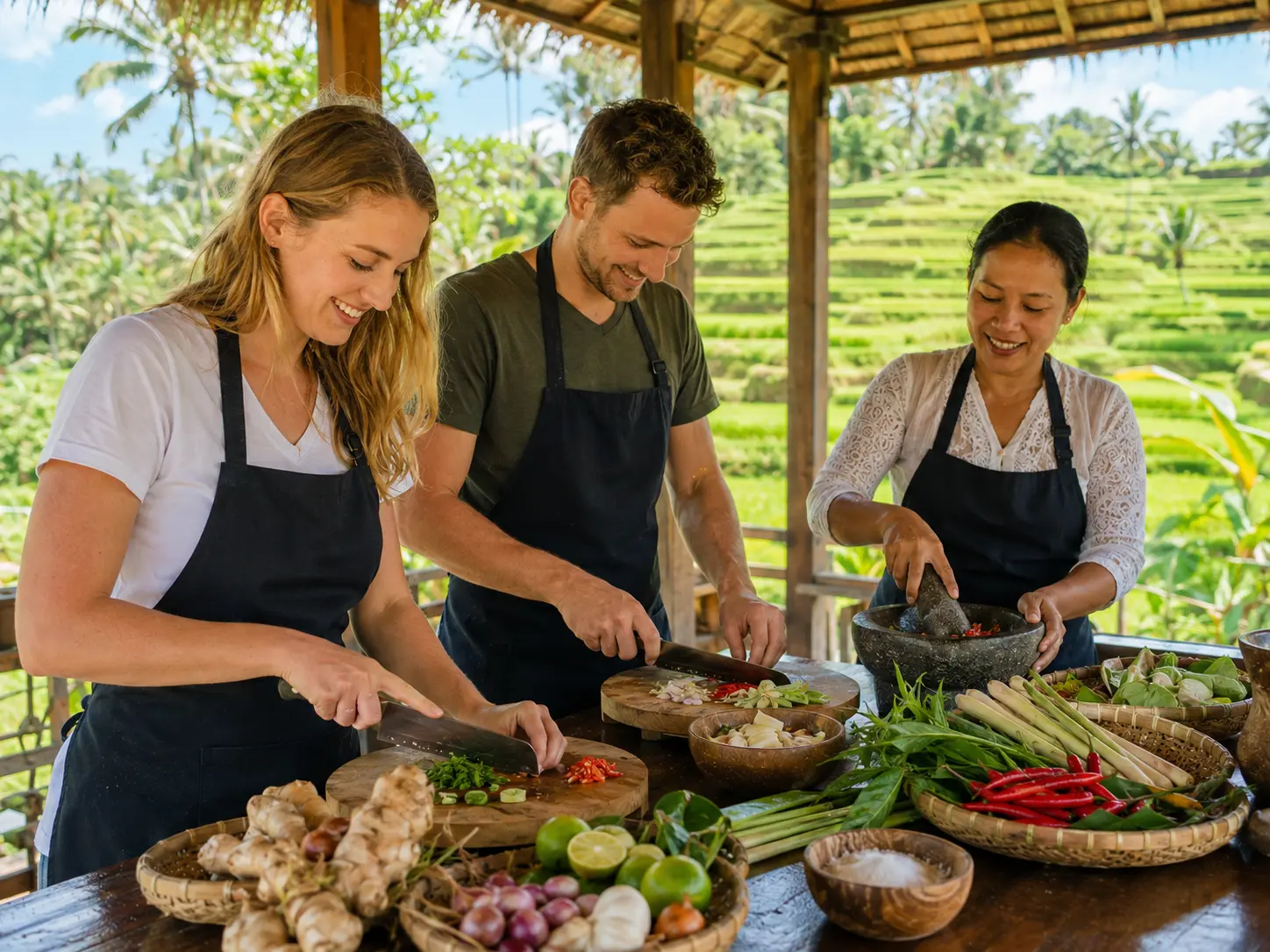
Jatiluwih is one of the strongest choices when you want the setting to be as memorable as the cooking itself. The Jatiluwih rice-terrace landscape forms part of UNESCO’s Cultural Landscape of Bali Province World Heritage property, centred on the traditional Subak irrigation system. A class here makes most sense when you want food, rural scenery and agricultural context together rather than simply reaching a kitchen as quickly as possible.
The main trade-off is travel time. Jatiluwih is much farther from the main South Bali resort areas than many classes in Seminyak, Sanur or Kuta, so it is usually better treated as a wider Jatiluwih or central-Bali outing rather than a short stand-alone lesson.
Network-operated option: Best Bali Adventures currently offers a Jatiluwih cooking experience of about five hours that combines a guided rice-terrace walk, fresh garden ingredients, hands-on Balinese cooking and the meal you prepare. Its published conditions currently state a minimum of two participants and that the Jatiluwih entrance ticket is separate. Because Best Bali Adventures is connected to the same wider Best Bali network, this guide discloses that relationship and still recommends comparing the experience with other classes based on travel time, menu, group size, dietary needs and inclusions.
If you are particularly interested in this cooking class in the UNESCO-listed Jatiluwih rice-terrace landscape, contact Best Bali Adventures on WhatsApp and ask specifically for the Jatiluwih rice-terrace cooking class →
Which Cooking-Class Format Is Right for You?
The best format depends on whether you value cultural context, maximum cooking time, privacy or convenience.
| Format | Best for | Check before booking |
|---|---|---|
| Market + cooking | First-time visitors who want to understand local produce and spices before entering the kitchen. | Market visits are often morning-only and may add walking and an early start. |
| Cooking-only group class | Travellers who mainly want hands-on kitchen time and a shorter schedule. | Group size, actual hands-on participation and number of dishes. |
| Farm / garden class | Visitors interested in ingredients, growing methods and a more rural setting. | Walking surfaces, transport and how much of the session is farm tour versus cooking. |
| Private class | Families, couples, groups or travellers with specific menus and dietary requirements. | Whether the private price is per person or per group and whether transport is included. |
| Villa / mobile lesson | Guests who prefer to cook at their accommodation. | Kitchen requirements, travel surcharge, cleanup arrangements and ingredient inclusions. |
Bali Cooking Class Prices & Value
A practical current planning range for many shared online classes is roughly IDR 300,000–600,000 per person, but price alone does not show value. Private classes, premium resort kitchens, long transfers or more elaborate packages can cost substantially more.
Compare the complete inclusion list: market visit, pickup and drop-off, number of dishes, meal, drinks, recipe booklet or digital recipes, private versus shared format, and any extra cultural or farm activities. A cheaper class can be better value when it is close to your hotel and includes what you actually want.
Should You Choose a Class With a Market Visit?
Choose a market visit if understanding ingredients is part of the experience you want. A guided market stop can make unfamiliar herbs, roots, spices, vegetables and traditional products easier to understand before you cook with them.
Do not assume every class includes one. Market visits are commonly attached to morning sessions because traditional markets are most active earlier in the day. Afternoon and evening classes often focus on the kitchen instead. Confirm whether the market is a real guided component, a quick stop, or not included at all.
What Do You Cook in a Balinese Cooking Class?
Menus vary, but the most useful classes teach techniques and flavour foundations rather than only a fixed list of finished dishes. Many classes introduce a Balinese spice paste such as base genep, then use related ingredients across several dishes.
- Satay or sate lilit
- Vegetable dishes such as urap or gado-gado
- Balinese curries or braised dishes
- Sambal and fresh spice preparations
- Tempeh or tofu dishes
- Rice dishes
- Banana, coconut or rice-based desserts
The exact menu can differ by operator, season and dietary version. If there is one dish you specifically want to learn, ask before booking rather than assuming it will be included.
Vegetarian, Vegan, Halal & Allergy Requirements
Vegetarian and vegan classes are widely available, but other dietary requirements need more careful confirmation. A menu can be meat-free without being suitable for someone with a serious allergy or a strict religious dietary requirement.
- Vegetarian / vegan: often possible, especially when requested in advance.
- Allergies: ask specifically about peanuts, soy, gluten, shellfish, shrimp paste, coconut and shared preparation surfaces where relevant to you.
- Halal requirements: do not assume a Balinese cooking school is halal simply because a vegetarian option exists; confirm ingredients, utensils and kitchen practices directly.
- Low-spice requests: often possible, but tell the class before arrival if chilli tolerance matters.
For severe allergies or coeliac disease, obtain a direct confirmation from the operator rather than relying only on a marketplace filter or a generic “dietary options available” label.
Morning vs Afternoon Cooking Classes
| Time | Main advantages | Trade-offs |
|---|---|---|
| Morning | More likely to include a traditional market visit and often finishes around lunch. | Earlier pickup and potentially more traffic planning if travelling from the coast to Ubud. |
| Afternoon | Easier after a relaxed morning and may fit around sightseeing or hotel time. | Market visits are less common and the class may finish around dinner. |
| Evening | Works as a dinner activity and keeps the daytime free. | Fewer options, no morning market and later transport back to your hotel. |
Choose the session based on the actual experience rather than assuming every time slot has the same itinerary.
Pickup, Transport & Location Planning
Never assume “hotel pickup” means pickup anywhere in Bali. Some classes include only central Ubud transfers, some cover selected South Bali zones, some provide a meeting point, and others require you to arrange your own transport.
For a class far from your accommodation, compare the total door-to-door time before booking. A private driver through BestBaliDrivers.com can be useful when you need child seats, have a larger group, want a guaranteed return vehicle or plan to combine the class with other stops. If transport is already included and the class is near your hotel, a separate driver may be unnecessary.
Are Bali Cooking Classes Good for Families?
They can be excellent family activities, but there is no universal minimum age or participation rule. Children may enjoy grinding spices, mixing ingredients and shaping food, while knife work, hot pans and open flames may require closer supervision or age limits.
For younger children, ask whether the class has child-friendly tasks, step stools, shorter menus or a private-family option. Also confirm whether children pay the full adult rate, a reduced rate or are not accepted below a particular age.
Accessibility & Physical Comfort
Accessibility depends heavily on the individual venue. Traditional homes, farms, markets and open-air kitchens may include steps, uneven paths, low work surfaces or limited wheelchair access, while hotel or purpose-built kitchens may be easier to navigate.
Classes can also involve prolonged standing, kitchen heat and walking through a market or garden. If you need seating, step-free access, an accessible toilet or limited standing time, ask the operator to describe the route and kitchen setup before you book.
Food Safety, Allergies & Kitchen Risks
A cooking class involves normal kitchen risks: sharp knives, hot oil, flames, hot pans and raw ingredients. Follow the instructor’s safety directions and tell the class in advance about allergies, pregnancy-related food restrictions or other medical considerations that could affect participation.
If cross-contact matters, ask how ingredients, chopping boards, utensils and cooking stations are shared. A general vegetarian or vegan option does not automatically mean an allergy-safe preparation environment.
What to Bring
- Comfortable clothes: expect warm kitchen conditions and possible outdoor sections.
- Practical footwear: useful for market, garden or village walking.
- Hair tie if needed: long hair should be secured around food and heat.
- Rain protection: useful when a market or garden visit is included during wetter weather.
- Your dietary information: keep any important allergy or restriction details clear and available.
- An appetite: most classes finish with a substantial meal of the dishes prepared.
Avoid loose sleeves or jewellery that could get in the way around stoves and food preparation. Ingredients, aprons and equipment are commonly provided, but check your exact booking rather than assuming.
Frequently Asked Questions
Do You Need Cooking Experience?
No. Most tourist-oriented Balinese cooking classes are designed for beginners and guide you through the preparation step by step.
How Long Does a Bali Cooking Class Take?
Many classes take around three to five hours. Sessions with a market, farm, rice-field visit or longer transport can take more of the day.
Is a Market Visit Always Included?
No. Market visits are package-specific and are particularly common with morning classes. Confirm the itinerary if the market is important to you.
Do You Eat the Food You Cook?
Usually yes. Eating the prepared dishes as lunch, dinner or a shared buffet is a standard part of many cooking-class formats, but check your exact package.
Are Vegetarian and Vegan Classes Available?
Yes. Many Bali cooking classes offer vegetarian or vegan menus or can adapt a standard menu when requested in advance.
Can People With Food Allergies Join?
Possibly, but you should not rely on a generic dietary label. Contact the class directly about the specific allergen and ask about shared utensils, surfaces and ingredients before booking.
Do Cooking Classes Include Hotel Pickup?
Some do and some do not. Included zones can be limited, particularly around Ubud, so check the pickup area and any surcharge before payment.
Can You Take a Cooking Class in Jatiluwih?
Yes. Jatiluwih has cooking experiences that use the rice-terrace setting as part of the day rather than treating the class as a stand-alone kitchen activity. Best Bali Adventures currently operates one option combining a guided rice-terrace walk with hands-on Balinese cooking and the meal you prepare. Allow for the longer transfer from South Bali and check the current meeting point, inclusions and entrance-ticket conditions before booking.
Can You Combine a Cooking Class With Sightseeing?
Yes, but plan around the class’s fixed start and finish time. A morning Ubud class can work with one or two nearby stops later in the day, while a Jatiluwih class is better treated as part of a wider rice-terrace or central-Bali outing. Avoid building an overpacked itinerary around Bali traffic.
Related Experiences
These guides are useful when you want to combine a cooking class with another hands-on, cultural or landscape-focused Bali experience.
Compare other hands-on Bali experiences such as craft, art and traditional skill workshops.
A practical nearby comparison when your cooking class is in central Ubud and you want one additional stop.
Useful with north-Ubud or village cooking classes when timing and transport make a combined visit realistic.
Final Advice
For most first-time visitors, the safest choice is a well-reviewed shared class with a clearly described hands-on menu, a location that suits the rest of the day and a market visit only if you genuinely want the early start and extra walking. Prioritise dietary confirmation, class location and what is actually included before paying for a premium package.
If you are staying in South Bali, do not automatically travel to Ubud just because it has more cooking schools. Choose Jatiluwih when the rice-terrace setting and rural experience justify the longer journey; choose a class closer to your hotel when convenience matters more. The best class is the one that gives you the experience you want without creating unnecessary hours of transport.
Explore More
For other hands-on experiences, visit BestBaliWorkshops.com. For a broader selection of bookable Bali experiences, BestBaliActivities.com connects activity categories and dedicated booking pages.
Discover More About Bali
BestBali4U.com connects the wider Best Bali 4 U knowledge network, including specialist guides to activities, attractions, food, culture, transport, accommodation and practical Bali travel planning.
Healthcare in Bali
For general information about clinics, hospitals, pharmacies and other healthcare topics in Bali, use BestBaliHealthcare.com. For urgent or serious concerns, seek appropriate professional medical care rather than relying on travel information websites.
Plan Your Time in Bali
If your cooking class does not include transport, BestBaliDrivers.com covers private drivers and transfers. For a full private sightseeing day built around the class, use BestBaliDayTours.com. Personal local planning and booking assistance is available separately through BestBaliAdventures.com, including its own cooking experience in the Jatiluwih rice-terrace area.
Booking & Local Assistance
For current Balinese cooking class booking options, including the Jatiluwih rice-terrace experience, use the dedicated booking page on BestBaliActivities.com. Best Bali Adventures can provide personalised local help with choosing the class, dietary requirements, private transport and wider Jatiluwih planning.
Questions About This Guide?
Have you noticed information that needs correcting or updating? Contact the editorial team with questions about this guide, reliable local knowledge or suggestions that could help other visitors.